
Disney’s “Frozen”: How a Japanese Language Translation Illustrates the Critical Importance of Proper Word Selection
Author: Remu Ogaki
In Disney’s smash-hit animated film from 2013 “Frozen,” arguably the most iconic scene involves Princess Elsa using her magic to create an ice castle in the mountains while belting out the signature line of the movie:
Let it go, let it go Can’t hold it back anymore Let it go, let it go Turn away and slam the door
This song is my four-year-old daughter’s absolute favorite song. Almost daily, I hear the signature line blaring from her room, as she her twirls in her blue Elsa dress from last Halloween.
But in our bilingual Japanese-English household, my daughter listens and twirls to this song not only English, but also in the Japanese translation.
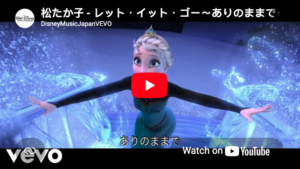
The signature line “Let it go” is translated to “Ari no mama-no” which literally translates back to “[stay] as you were.”
It’s a nifty bit of translation from some of the best translators I’ve ever seen. Disney translators are constantly faced with incredible challenges in translating song lyrics. Not only do the song lyrics need to match up with the intonation and length of the English lyrics, but the translated lyrics need to convey the same story and feeling.
The song “Let it go” is about Princess Elsa “letting go” of attempting to hide herself from others and living in fear of others’ expectations. She has decided to leave and make her own life in the mountains, where she can be herself.
Instead of trying to directly translate the phrase “Let it go” into a Japanese phrase that matches both the symbolic meaning and literal meaning in some way, the Japanese lyricist chose a phrase that conveys the same meaning, despite having a literal meaning that is entirely different.
In fact, the phrase “Let it go” appears 3 separate times in the original English lyrics. In the Japanese lyrics, the translator chose to translate the first 2 occasions as “ari no mama-no” (“stay as you are”) but on the third occasion uses a complete different phrase “kore de iino” (“this is alright [as it is].”).


This demonstrates how great translators capture phrases in different ways to best fit the context of the lyrics. Even if the same phrase “Let it go!” is being translated, the correct, or best translation for that context may be 2 or more different phrases. Context matters, and perhaps most importantly, there is no single correct answer.
You may be asking yourself: What does any of this have to do with the law?
Many people who speak only one language may be under the impression that there is one and only one correct translation for any given phrase. It might be difficult to imagine that in concise, technical writing, such as in the context of law or business communications, more than one correct translation is even possible.Allow me to demonstrate that even in these writing contexts, more than one correct translation is not only possible, it is common.
Literalist word-for-word translations are usually objectively incorrect, due simply to variations in grammar and syntax between languages. Thus translators must use context to select a defensibly accurate translation that reflects accurate word choices, and also conveys the correct meaning..
Let’s examine a case alleging false public statements by corporate executives during an SEC investigation, where an executive texted a subordinate to make amendments on 表 (hyou).
Hyou can be translated legitimately and accurately as a table of figures, making one possible translation of the phrase: “make changes to the table of figures.” However, Hyou can also and just as legitimately be translated to “on the surface.” An equally valid translation was “make changes to the outward-facing figures,”—implying the existence of a hidden book of accounting.
Needless to say, the selection of the translator was legally significant!
Even where such radical differences are not present, often a given translation provides options that create room for legal argument, or that alter the impression of the witness.
Securing the best foreign language evidentiary experts maximizes a litigator’s opportunities to prevail in litigation, by ensuring the English language evidence presents the case facts in the most advantageous light possible.
About the Author

Remu Ogaki,
Counsel; Foreign Language Review Services
Remu has well over a decade of experience managing large teams of foreign language attorneys, paralegals and translators in the US and Japan. Follow him on LinkedIn here.