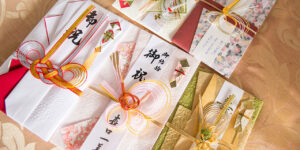
What Gives?: Japanese Gift-Giving in the Face of Anti-Corruption Laws
Author: Glenn Yamada
The custom of gift-giving in business is common-place in Japan, but this gesture can raise concerns under anti-corruption laws. eDiscovery plays an important role in determining when such gifts cross the line.
Presents, Presents, Presents!
As a child, I remember going to my grandmother’s house in Japan and being surrounded by white boxes wrapped in paper with Japanese writing. Sneaking a quick peak under the wrapping, I could see perfectly shaped fruits and high-end confections. These were clearly not intended for me and my brothers; our snacks typically came out of plastic bags with cartoon characters. These were gifts for my grandmother’s customers and suppliers to show her appreciation and to maintain relationships (she owned a business) as part of the customary practice of gift giving called oseibo in Japan.
Japanese traditional gift giving includes two annual gift giving events–Oseibo (end of the year) and ochugen (summer). Both are Japanese seasonal gift-giving customs and are more broadly reflective of the gift exchange culture in Japan.
However, gift-giving among businesses can run afoul of anti-corruption laws such as the U.S. Foreign Corrupt Practices Act (FCPA). The FCPA is a U.S. law that makes it illegal for individuals and companies to bribe foreign officials to gain or keep business. In cases or investigations where such violations are suspected, it’s important to understand the cultural nuances behind gift-giving during discovery to put evidence in proper cultural context.
I Got You This Time…
In many Japanese companies, it is part of the national culture to give gifts as seasonal greetings or as an appreciative gesture after the successful execution of a business deal or joint venture. The gifts are normally high-end fruits or sweets of relatively nominal value.
But gifts can be a tricky area to navigate in the context of dealing with government officials or regulatory matters. In particular, the FCPA doesn’t “contain a minimum threshold amount for corrupt gifts or payments…”[1]
A gift which might otherwise seem unnecessary or excessive in American business culture might be a virtual social obligation in a Japanese context. Thus, cultural expectations can play a role in understanding the intent of the gift giver.
I worked on a case where management suspected some of the employees in a Japanese company of providing government workers with gifts that could be seen as bribes. Regardless of whether there was actual “corrupt intent”, many red flags go up in situations like this, and it became a forensic exercise in piecing together events, receipts and discussions during discovery to determine intent.
The Ties That Bind
Other situations that can invite FCPA scrutiny are 懇親会 (konshinkai)—company-sponsored social gatherings, and 付き合い (tsukiai)—activities undertaken by companies to maintain and strengthen bonds between organizations that include golf events, industry events, hosted seminars and more.
To the extent that business-covered expenses for these gatherings become excessive or appear to influence the hosted officials in some way, FCPA alarms may sound. And since these engagements are very much a part of the business culture in Japan, corrupt intent often will need to be assessed in the context of Japanese cultural expectations. This should color how investigations (and document review) can and should present the evidence, whether to a corporate board or in litigation.
Which means…?
In document review, what might appear to be completely unrelated documents on their own could reveal a disguised attempt at skirting the law in its proper context. Something as inconsequential as a dinner receipt, an expense report, an email mentioning a meeting could be hinting at these issues. But, to put these pieces together, cultural insight is critical to distinguish evidence from irrelevant material.
Attorneys who are knowledgeable about Japanese culture and U.S. anti-corruption laws are best positioned to make these important connections, such as those here at Hilgers Graben. Our Japanese-fluent attorneys ensure that nothing gets missed and anti-corruption puzzles are solved.
Contact us at foreignlanguage@hilgersgraben.com to learn more.

Glenn Yamada, Counsel; Foreign Language Review Services
Glenn Yamada is a seasoned e-discovery attorney at Hilgers, where he brings over a decade of expertise working in high-stakes, complex litigations. Follow him on LinkedIn here.
1 U.S. Department of Justice & U.S. Securities and Exchange Commission. (2020). A Resource Guide to the U.S. Foreign Corrupt Practices Act (2nd ed., p. 14) https://www.justice.gov/criminal/criminal-fraud/file/1292051/download and focuses instead on corrupt intent. Also, gifts can take various forms, such as payments for entertainment and travel expenses.